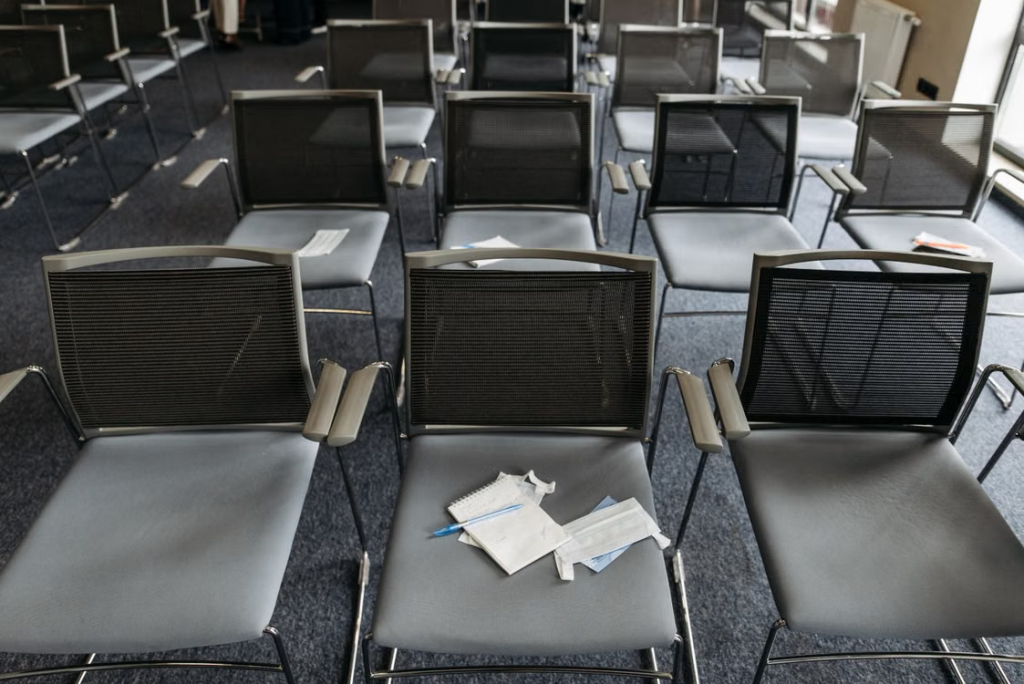
I’ve lost count of how many meetings I’ve walked into where I knew something was off before anyone said a word.
The slide deck hadn’t been opened. Nobody had started presenting. Sometimes people were still finding seats. But you could feel it. Maybe it was the silence. Maybe it was the way two people avoided looking at each other. Maybe it was the executive checking their phone while everyone else waited. Whatever it was, your brain had already started putting the story together.
We call that “the vibe.”
It’s a funny word for something that’s actually pretty sophisticated.
Our brains are constantly processing signals that have nothing to do with words. The room, the lighting, the pace, the body language, who’s speaking to whom and who’s not. Long before we consciously decide how we feel about a situation, we’ve already started forming an opinion about it. We don’t usually notice it happening. We just say something feels off.
As communicators, I think we sometimes forget that.
We spend hours debating headlines, rewriting copy, polishing presentations, and tweaking the wording of an announcement. Those things matter. But they aren’t the only things communicating. By the time your audience gets to the first sentence, they’ve already been reading everything else around it.
I’ve seen beautifully designed presentations fail because the room wasn’t ready to hear them. I’ve also seen average presentations succeed because people trusted the person delivering them. The content mattered, of course. But it wasn’t the only thing shaping the experience.
The same thing happens with brands.
Walk into an Apple Store and nobody has to explain what Apple wants you to feel. The architecture does some of the work. The lighting does some of the work. The way the products are displayed does some of the work. Before an employee says hello, you’ve already formed an impression about the company. Whether you like that impression or not is another conversation, but it didn’t happen by accident.
That’s communication.
I think organizations underestimate this all the time because it’s difficult to measure. You can track open rates. You can measure clicks. You can count attendees. It’s much harder to quantify whether the meeting felt collaborative, whether the onboarding process inspired confidence, or whether a customer left feeling like someone genuinely cared.
But people remember those things.
I’ve always liked the word vibe, mostly because it refuses to pretend everything can be explained by a spreadsheet. Sometimes the data says everything is working, but something still feels wrong. Other times, the numbers aren’t perfect and yet everyone leaves energized and optimistic.
Neither feeling should be ignored.
Communication has never been just about words. It’s about everything surrounding them. The environment. The timing. The expectations. The thousand little signals people absorb before they consciously process what you’re trying to say.
The words matter.
But they rarely speak first.
Let’s Talk
At Narrativo, we think communication starts long before the first sentence. Every interaction, every environment, and every touchpoint tells part of the story.
If you’re trying to create presentations, experiences, or messages that people don’t just understand, but genuinely connect with, I’d love to help.
Ya perdí la cuenta de cuántas reuniones he entrado y de una sé que algo anda mal, antes de que alguien diga ni pío.
La presentación ni se había abierto. Nadie había empezado a hablar. A veces la gente todavía estaba buscando dónde sentarse. Pero tú lo sentías. Tal vez era el silencio. Tal vez era cómo dos personas evitaban mirarse. Tal vez era el ejecutivo pegado al celular mientras el resto esperaba. Fuera lo que fuera, tu cerebro ya había empezado a armar la historia.
A eso le decimos la vibra.
Es una palabra curiosa para algo que, en realidad, es bastante sofisticado.
El cerebro procesa todo el tiempo señales que no tienen nada que ver con las palabras. El espacio, la iluminación, el ritmo, el lenguaje corporal, quién le habla a quién y quién no. Mucho antes de decidir conscientemente cómo te sientes sobre una situación, ya te formaste una opinión. Casi nunca te das cuenta de que está pasando. Simplemente dices que la vibra se siente rara.
Los que trabajamos en comunicaciones a veces se nos olvida eso.
Nos pasamos horas discutiendo un titular, reescribiendo un texto, puliendo una presentación, afinando la palabra exacta para un anuncio. Y sí, todo eso importa. Pero no es lo único que está comunicando. Para cuando tu público llega a la primera oración, ya leyó todo lo que la rodea.
He visto presentaciones bellísimas fracasar porque el salón no estaba listo pa' recibirlas. También he visto presentaciones bien sencillas funcionar de maravilla porque la gente confiaba en quien las presentaba. El contenido importaba, claro. Pero no era lo único que definía la experiencia.
Con las marcas pasa lo mismo.
Entras a una tienda de Apple y nadie tiene que explicarte qué quiere que sientas la marca. La arquitectura hace parte del trabajo. La iluminación también. Cómo están exhibidos los productos, también. Antes de que alguien te diga "bienvenido", ya te habías hecho una idea de la empresa. Que te guste esa impresión o no, esa es otra conversación, pero no pasó de casualidad.
Eso también es comunicación.
Creo que muchas organizaciones subestiman esto porque es difícil de medir. Puedes medir cuántos abrieron un correo, cuántos hicieron clic, cuántos llegaron a una reunión. Lo difícil es medir si la reunión se sintió colaborativa, si el proceso de bienvenida inspiró confianza, o si un cliente salió sintiendo que alguien de verdad se preocupó por ayudarlo.
Pero eso es justo lo que la gente recuerda.
Siempre me ha gustado la palabra vibra, sobre todo porque no pretende que todo se explica con una hoja de cálculo. A veces los números dicen que todo está funcionando, y aun así, algo se siente mal. Otras veces las métricas no son perfectas y todo el mundo se va motivado, optimista, con ganas de seguir.
Ninguna de esas sensaciones se debe ignorar.
La comunicación nunca ha sido solo palabras. Es todo lo que las rodea: el ambiente, el momento, las expectativas, y esas mil señales chiquitas que la gente absorbe mucho antes de procesar conscientemente lo que le quieres decir.
Las palabras importan.
Pero casi nunca hablan primero.
Hablemos
En Narrativo creemos que la comunicación empieza mucho antes de la primera oración. Cada interacción, cada espacio, cada punto de contacto: todo comunica.
Si estás creando una presentación, una experiencia o un mensaje con el que quieres que la gente no solo entienda, sino que de verdad conecte, hablemos.