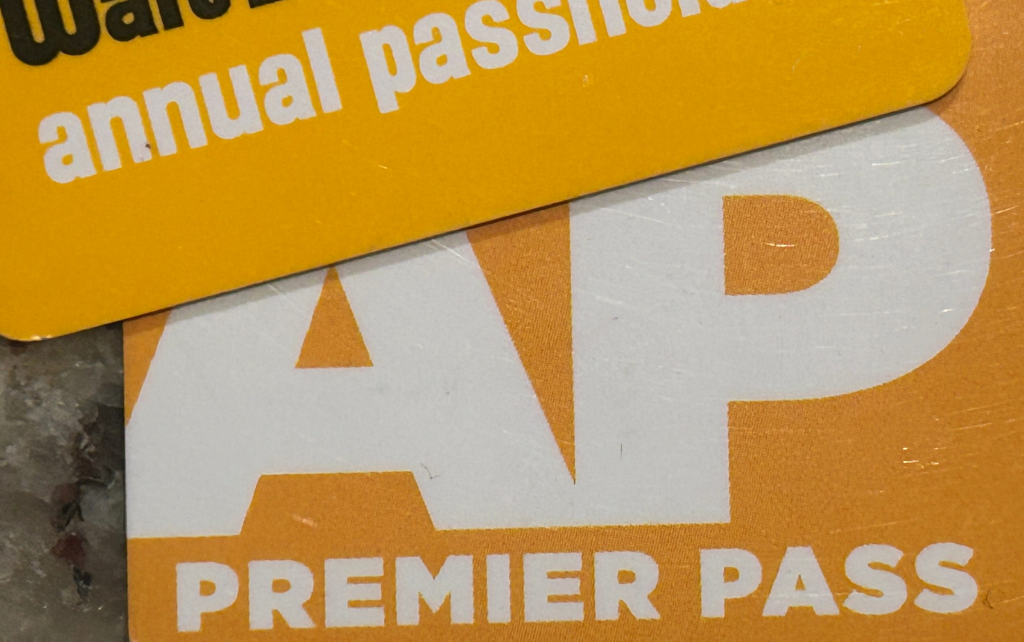
People often ask why I enjoy theme parks so much. Usually they assume it’s the rides, or the shows, or the fact that I spent part of my career working in them. Those things are certainly part of it, but they’re not the real answer. Some of my favorite days in a park have involved barely any attractions at all. I’ve spent hours just walking, people-watching, stopping for a coffee, and soaking in the atmosphere. It took me a long time to realize what I was actually enjoying.
I wasn’t escaping reality.
I was spending time inside a coherent system.
That’s a strange way to describe a theme park, but I think it’s the reason they feel so different from the world outside their gates. In a well-designed park, everything is working toward the same goal. The environment supports the story. The operations support the environment. The signs tell you where to go without making you think about it. Even the things you aren’t supposed to notice have been designed with intention. You may be standing in a completely fictional place, but nothing about it feels contradictory.
For a few hours, you’re in a world that behaves the way it promised it would.
That’s surprisingly rare.
Most of the systems we interact with every day ask us to do the opposite. Websites that contradict themselves. Software that makes simple tasks feel complicated. Organizations that publish one set of values while rewarding another. Processes that expect people to compensate for bad design. None of these things are individually catastrophic. They’re just… exhausting. We spend so much time translating unclear systems that we’ve started treating that effort as normal.
You don’t realize how much mental energy that takes until it suddenly isn’t required.
That’s why I don’t think theme parks are really an escape from reality. They’re an escape from friction. For a little while, you stop wondering whether you’re in the right place, clicked the right button, or misunderstood the instructions. The system carries some of that burden for you. Instead of demanding constant interpretation, it quietly says, “We’ve thought this through.”
As someone who works in communication, I think about that all the time. We tend to treat communication as something that happens when we write an email or build a presentation, but it’s much bigger than that. A confusing process communicates. An inconsistent interface communicates. A meeting that starts fifteen minutes late communicates. Every part of an experience tells people something about the organization behind it, whether anyone intended it to or not.
That’s one of the reasons I love good design.
Not because it looks nice.
Because it respects people’s attention.
When a system is coherent, it doesn’t ask people to constantly figure it out. It explains itself. It removes unnecessary decisions. It gives people confidence that they understand what’s happening and what comes next. That’s true whether you’re navigating a theme park, using a piece of software, or sitting through a presentation.
Maybe that’s why I keep coming back to theme parks. They remind me that clarity isn’t some impossible ideal. It can be designed. It can be built. It can exist at a massive scale if enough people care about the experience they’re creating.
The real magic isn’t that theme parks transport us to another world.
It’s that, for a little while, they show us how much better our own world could feel if we designed more of it with people in mind.
Let’s Talk
Every organization has systems people have quietly learned to work around. At Narrativo, we bring clarity, empathy, and thoughtful communication into that experience. Because good communication doesn’t just explain the system, it makes the system feel like it was designed for people in the first place.
Mucha gente me pregunta por qué me gustan tanto los parques de diversiones.
Casi siempre piensan que es por las montañas rusas, los espectáculos, o porque parte de mi carrera la pasé trabajando en ellos. Todo eso ayuda, claro. Pero no es la verdadera razón.
Algunos de mis mejores días en un parque han sido sin montarme en casi nada. Caminando. Observando a la gente. Sentado con un café. Disfrutando el ambiente, sin más.
Me tomó tiempo entender qué era lo que en realidad estaba disfrutando. No estaba escapando de la realidad. Estaba metido en un sistema que tiene sentido.
Suena raro describir así un parque de diversiones, pero creo que por eso se sienten tan distintos al mundo que queda al otro lado de sus portones.
En un parque bien diseñado, todo apunta pa'l mismo lado. El entorno apoya la historia. La operación apoya el entorno. Los letreros te llevan adonde tienes que ir sin que tengas que pensar de más. Hasta lo que no se supone que notes fue pensado con intención.
Puede que estés en un lugar totalmente ficticio, pero nada se siente fuera de lugar. Por unas horas, estás en un mundo que funciona exactamente como prometió que iba a funcionar. Y eso es mucho más raro de lo que parece.
La mayoría de los sistemas con los que lidiamos todos los días te piden lo contrario. Entras a páginas web que se contradicen. Usas programas donde lo más sencillo termina siendo un enredo. Trabajas en organizaciones que dicen valorar una cosa, pero premian otra. Sigues procesos que esperan que tú arregles decisiones de diseño que nunca debieron existir.
Ninguna de esas cosas, por sí sola, es un desastre. Pero cansan.
Pasamos tanto tiempo tratando de descifrar sistemas confusos que ya asumimos que ese esfuerzo es parte normal de vivir. No te das cuenta de cuánta energía mental te quita... hasta que deja de hacer falta.
Por eso no creo que los parques de diversiones sean una forma de escapar de la realidad. Son una forma de escapar de la fricción.
Por un rato dejas de preguntarte si estás en el lugar correcto, si apretaste el botón correcto, o si entendiste mal las instrucciones. El sistema carga con parte de ese trabajo por ti. En vez de obligarte a estar interpretando todo el tiempo, parece decirte, bajito: "Esto ya lo pensamos."
Trabajando en comunicaciones, pienso mucho en eso. Solemos creer que la comunicación pasa cuando escribimos un correo o armamos una presentación. Pero es mucho más que eso.
Un proceso confuso comunica. Una interfaz que no cuadra comunica. Una reunión que empieza quince minutos tarde comunica.
Cada parte de una experiencia le dice algo a la gente sobre la organización detrás de ella, lo haya pensado o no.
Por eso me apasiona el buen diseño. No porque se vea bonito. Sino porque respeta el tiempo y la atención de la gente.
Cuando un sistema tiene sentido, no te tiene todo el tiempo descifrándolo. Se explica solo. Elimina decisiones de más. Hace que la gente sienta que entiende qué está pasando y qué viene después.
Eso aplica igual si estás recorriendo un parque, usando un programa, o sentado escuchando una presentación.
Quizás por eso siempre vuelvo a los parques de diversiones. Porque me recuerdan que la claridad no es un imposible. Se puede diseñar. Se puede construir. Y puede existir a gran escala cuando suficiente gente se preocupa de verdad por la experiencia que está creando.
La verdadera magia de un parque no está en transportarte a otro mundo. Está en que, por unas horas, te demuestra cuánto mejor se podría sentir el nuestro si diseñáramos más cosas pensando primero en la gente.
Hablemos
Toda organización tiene procesos que la gente ha aprendido a navegar, aunque no debería tener que hacerlo. En Narrativo ayudamos a que esos sistemas se entiendan mejor: más claridad, más empatía, comunicación que sí piensa en la gente.
Porque una buena comunicación no solo explica un sistema. Hace que ese sistema se sienta como si hubiera sido pensado para la gente desde el principio.