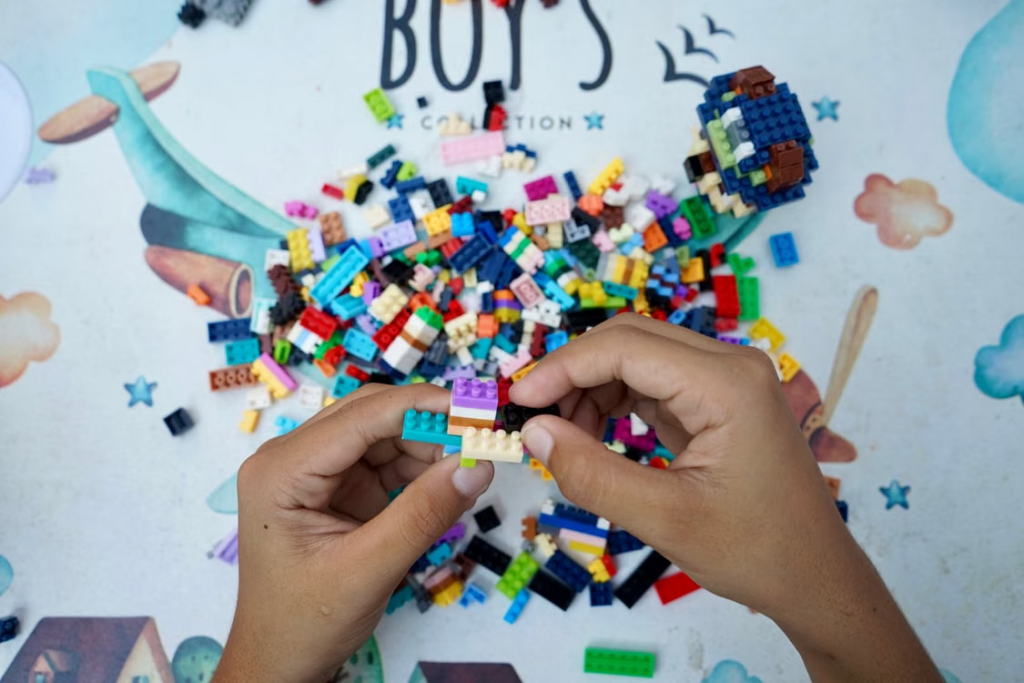
A few months ago, I was seriously considering having my son’s next birthday party at Bricks & Minifigs. If you’ve never been to one, imagine a candy store for LEGO fans. Used sets. Loose bricks. Minifigures. Kids building things together. Adults pretending they’re only there for the kids. It checked all the boxes.
I’m not anymore.
Nothing happened at my local store. As far as I know, they’re still run by good people. The shelves are still full of LEGO. Kids are still discovering the joy of building something out of a pile of plastic bricks. If I walked in tomorrow, it would probably look exactly the way it did the last time I visited.
The thing that changed wasn’t the store. It was what the name over the door meant to me.
I’ve always been fascinated by branding because it’s one of the few disciplines where perception becomes reality. We spend a lot of time talking about logos, typography, color palettes, and visual identity, but those are just the wrappers. A brand is really the collection of ideas people attach to those symbols. You don’t get to decide what those ideas are. You can influence them, certainly. But at the end of the day, they live in someone else’s head.
For years, Bricks & Minifigs represented something simple. Community. Creativity. A place where parents and kids could share a hobby, where collectors could hunt for something interesting, where a toy somehow managed to become a common language across generations. That’s what I associated with the name.
Then a dispute inside the company spilled into public view.
I’m deliberately not rehashing it here because, honestly, that’s not the interesting part to me. Lawyers can debate the facts. Comment sections can pick sides. What caught my attention wasn’t the controversy itself. It was how quickly my own perception changed without me ever making a conscious decision.
One day I was thinking, “That would be a great place for a birthday party.”
A few weeks later, without anyone convincing me to do so, I’d quietly crossed it off the list.
That’s branding.
Not the logo. Not the store. Not the product. The meaning.
Let’s Talk
Every organization is telling a story, whether it realizes it or not.
If you’re thinking about your brand, your reputation, or how people interpret your message, I’d love to help make sure the story you’re telling is the one people are actually hearing.
Hace unos meses estaba pensando en serio en celebrar el próximo cumpleaños de mi hijo en Bricks & Minifigs. Si nunca has ido a uno, imagina una tienda de dulces para fanáticos de LEGO. Sets usados. Piezas sueltas. Minifiguras. Niños construyendo juntos. Adultos fingiendo que están ahí solo por los niños. Tenía todo lo que estaba buscando.
Ya no.
No pasó nada en mi tienda de siempre. Hasta donde sé, la sigue manejando buena gente. Los anaqueles siguen llenos de LEGO. Los niños siguen descubriendo la alegría de construir algo con un montón de bloques de plástico. Si entrara mañana, probablemente se vería exactamente igual que la última vez que fui.
Lo que cambió no fue la tienda.
Fue lo que el nombre en la fachada empezó a significar para mí.
Siempre me ha fascinado el mundo de las marcas porque es una de las pocas disciplinas donde la percepción se convierte en realidad. Nos pasamos mucho tiempo hablando de logos, tipografías, paletas de color e identidad visual, pero todo eso es apenas la envoltura. Una marca es, en realidad, el conjunto de ideas que la gente le pega a esos símbolos. Tú no decides cuáles son esas ideas. Puedes influir en ellas, claro. Pero al final, viven en la cabeza de otro.
Durante años, Bricks & Minifigs representó algo bien sencillo. Comunidad. Creatividad. Un lugar donde padres e hijos podían compartir un pasatiempo, donde coleccionistas podían buscar algo interesante, donde un juguete de alguna forma se convertía en un lenguaje común entre generaciones. Eso era lo que yo asociaba con el nombre.
Luego, un conflicto interno de la empresa salió a la luz pública.
No voy a entrar en detalles aquí porque, honestamente, esa no es la parte que me interesa. Los abogados pueden discutir los hechos. Las redes sociales pueden escoger bandos. Lo que me llamó la atención no fue la controversia en sí. Fue lo rápido que cambió mi propia percepción, sin que yo tomara una decisión consciente.
Un día estaba pensando: "Eso sería un lugar buenísimo para un cumpleaños."
Unas semanas después, sin que nadie me convenciera de nada, ya lo había tachado de la lista.
Eso es una marca.
No el logo. No la tienda. No el producto. El significado.
Hablemos
Toda organización está contando una historia, se dé cuenta o no.
Si estás pensando en tu marca, en tu reputación, o en cómo la gente interpreta tu mensaje, me encantaría ayudarte a asegurarte de que la historia que cuentas sea la misma que la gente en realidad está escuchando.